Disaster Behavioral Health Glossary & Taxonomy

About This Glossary

This glossary defines behavioral health terms used throughout the Responder Wellness Center. Definitions are written in plain language and identify their sources.

It is designed for responders seeking to understand difficult experiences, leaders developing related policies, and clinicians who are new to fire, EMS, dispatch, or disaster-response work. A shared understanding of these terms can help people find appropriate support and help organizations develop clear, practical policies.

Each term includes a short code—EX, INJ, SUP, SYS, POP, or LIFE—that corresponds to a tag in the Resource Library. Use the code to find related tools and resources.

This glossary is for information only and is not a diagnostic tool. If any of these terms feel relevant to you, you don’t have to work through that alone. The Get Help Now bar at the top of every page connects you with 988 or the Disaster Distress Helpline at 1-800-985-5990. Both are available by call or text, day or night.

The NCDRW Taxonomy

The taxonomy organizes terms into six domains, using one guiding principle: responders are an affected population, not merely a workforce supporting survivors. Each domain is framed with responders at its center.

Table 1 — Taxonomy Domains
Code Domain What it covers Where it connects on the site
POP Populations Who the Center serves, by role and by how a disaster reaches them 3.1 Browse by Population
EX Exposure and stress response What the work does to a person, from expected reactions through strain 3.2 Deployment Cycle, 4.5 Evidence Review
INJ Injury and recognized conditions When stress becomes an injury or a diagnosable condition 2 Get Help Now, 6 Find a Provider
SUP Intervention and support What helps, from peers to clinicians, and what the evidence says about each 4.2 Deployment Model, 5.3 Peer Support Credentialing, 8.4 Building a Peer Support Team
SYS Incident and system The command, response, and funding structures disaster behavioral health works inside 5.2 Leadership Training, 8.2 Implementing the Standard
LIFE Lifecycle, family, and recovery The deployment cycle, reintegration, grief, family, and the whole career through retirement 3.2.4 Reintegration, 7 For Families

The exposure and injury domains follow the stress continuum (defined below): most reactions are temporary and expected, some develop into injuries, and a smaller number become conditions that require clinical care. This distinction helps prevent common, short-term responses, such as a poor night’s sleep, from being conflated with conditions like PTSD.

Exposure, Stress, and Injury

These terms describe the effects of the work on responders. EX marks expected reactions and strain; INJ marks injuries and recognized conditions. Terms are alphabetical.

Table 2 — Exposure, Stress, and Injury
Term Code Definition Basis
Acute stress disorder INJ Trauma symptoms (intrusive memories, avoidance, numbness, being on edge) that start after an event and last from 3 days to 1 month, enough to interfere with work or home life. If symptoms continue past a month, a clinician will consider PTSD. DSM-5-TR
Acute stress reaction EX The expected response in the hours and days after a hard call or deployment: racing heart, shaky hands, poor sleep, replaying the scene. It’s a normal reaction, not a disorder, and for most people it fades on its own. ICD-11 (QE84)
Burnout EX Exhaustion, growing distance or cynicism toward the job, and a falling sense of being effective, caused by chronic workplace stress that hasn’t been managed. The WHO classifies it as an occupational phenomenon tied to work conditions, not a medical condition. ICD-11 (QD85)
Compassion fatigue EX Emotional and physical depletion that comes from caring for people who are suffering. Often used interchangeably with secondary traumatic stress. Figley, 1995
Critical incident EX An event outside the normal run of the job that can overwhelm a person’s usual ways of coping, such as a child death, a mass casualty, or a line of duty death. NCDRW uses “potentially traumatic event” in clinical writing. Mitchell, 1983
Cumulative stress EX The load that builds from years of calls and deployments, with no single event to point to. Many responders who seek help can’t name “the call” because there wasn’t just one. NCDRW working definition
Hypervigilance EX Staying on high alert after the danger has passed: scanning rooms, sitting with your back to the wall, startling easily. Useful on scene, costly at home. DSM-5-TR (PTSD arousal cluster)
Moral distress EX Knowing the right thing to do and being blocked from doing it by constraints outside your control, such as triage rules, staffing, or supply shortages. Jameton, 1984
Moral injury INJ Lasting harm to a person’s sense of right and wrong after doing, failing to prevent, or witnessing acts that violate deeply held values, or after being betrayed by those in charge. It’s recognized in research and treatment but is not a diagnosis. Shay, 1994; Litz et al., 2009
Operational stress EX Stress built into the job itself: shift work, sleep loss, heat, noise, long hours, and austere conditions, separate from any single traumatic event. NCDRW working definition
Posttraumatic stress disorder (PTSD) INJ A condition lasting more than a month after trauma exposure, marked by intrusive memories, avoidance, negative changes in thinking and mood, and heightened arousal. The definition counts repeated, work-related exposure to the details of trauma, including through phone or radio, which covers much of what responders and telecommunicators carry. DSM-5-TR (Criterion A4)
Potentially traumatic event (PTE) EX Any event that could cause trauma, named that way because whether it does depends on the person, the moment, and what support follows. Common usage in trauma research
Prolonged grief disorder INJ Grief that stays intense and disabling well past the expected time: in adults, at least 12 months after a death, with daily yearning or preoccupation that disrupts life. Most grief, including grief after a line of duty death, is not this. DSM-5-TR (2022); ICD-11 (6B42)
Secondary traumatic stress EX Trauma symptoms that come from hearing about or helping others through trauma, rather than from being in danger yourself. Figley, 1995; NCTSN
Stress continuum EX A four-zone model of how stress moves through a person: Ready (green), Reacting (yellow), Injured (orange), and Ill (red). People move in both directions, and the goal is early recognition, not labeling. U.S. Navy and Marine Corps; adapted for fire and EMS in Stress First Aid
Survivor guilt EX Guilt at having lived when others died, or at believing you should have done more. Common after line of duty deaths and mass casualty events. Common clinical usage
Vicarious trauma EX A lasting shift in how a helper sees the world (safety, trust, control, meaning) after repeated empathic contact with other people’s trauma. McCann & Pearlman, 1990

Intervention and Support

These terms name what helps, and the definitions say plainly where the evidence is strong and where it isn’t. All carry the SUP code.

Table 3 — Intervention and Support
Term Definition Basis
After-Action Psychological Review NCDRW’s term for a structured, voluntary check on how people are doing after an incident, held separately from the operational after-action review. It screens for who needs follow-up and connects them to it, without requiring anyone to retell the event. NCDRW working definition
Chaplaincy (emergency services) Spiritual and emotional care offered by trained chaplains on scene, in the station, and with families, open to people of any faith or none. Confidentiality protections vary by state and agency, so ask what applies before you share. Federation of Fire Chaplains
Crisis line A 24/7 phone, text, or chat service for people in acute distress. 988 serves anyone; the Disaster Distress Helpline (1-800-985-5990) serves anyone affected by a disaster, responders included. SAMHSA
Critical Incident Stress Debriefing (CISD) A structured group meeting held a few days after a critical incident, in which participants talk through the event and their reactions in set phases. Reviews of single-session debriefing found it does not prevent PTSD and may worsen outcomes for some people, and the WHO recommends against it. NCDRW does not support mandatory single-session debriefing. Mitchell, 1983; Rose et al., 2002 (Cochrane); WHO, 2013
Critical Incident Stress Management (CISM) A broader system that includes pre-incident education, defusing, CISD, one-on-one crisis support, family support, and referral. CISM and CISD are not the same thing, and the evidence differs across its parts. Mitchell, 1983
Defusing A short, informal group check held within hours of an incident, focused on immediate needs and information. CISM model
Employee Assistance Program (EAP) Employer-funded, confidential counseling, usually limited to a few sessions. Quality varies, and many EAP counselors have no experience with responder culture. Common usage
Peer support Help from trained fellow responders who listen, recognize warning signs, and connect people to care. It’s not therapy, and good peer supporters know where their role ends. Common usage; NCDRW credentialing framework (in development)
Postvention Organized support after a suicide death to care for coworkers and family, reduce the risk of further suicides, and help the agency grieve. AFSP; common usage
Psychological debriefing The general term for any single session, held soon after an event, in which people describe what happened and how they felt. The evidence above on CISD applies to the category. WHO, 2013
Psychological First Aid (PFA) An evidence-informed approach for the first hours and days after a disaster that promotes safety, calm, connection, a sense of control, and hope. It doesn’t require anyone to talk about the event. Brymer et al., 2006 (NCTSN and National Center for PTSD); Hobfoll et al., 2007
Screening A brief tool (such as the PCL-5 or PHQ-9) that flags who may need a closer look. A screening result is not a diagnosis; an assessment by a qualified clinician is. Common clinical usage
Skills for Psychological Recovery (SPR) The follow-on to PFA, used weeks to months after a disaster to build skills in problem solving, managing reactions, helpful thinking, positive activity, and reconnecting with others. Berkowitz et al., 2010 (NCTSN and National Center for PTSD)
Stress First Aid (SFA) A peer and leader model adapted for fire and EMS, built on seven actions: Check, Coordinate, Cover, Calm, Connect, Competence, and Confidence. It’s designed for use on shift, not only after a big event. Watson & Westphal, 2020; adapted for fire and EMS by NFFF
Trauma-focused psychotherapy Structured treatments with the strongest evidence for PTSD. Both major U.S. guidelines strongly recommend Cognitive Processing Therapy (CPT) and Prolonged Exposure (PE). EMDR carries a strong recommendation in the 2023 VA/DoD guideline and a weaker, conditional one in the 2017 APA guideline. VA/DoD PTSD Guideline, 2023; APA, 2017
Trauma-informed care An approach in which a provider or agency assumes trauma may be present and builds care around six principles: safety; trustworthiness and transparency; peer support; collaboration; empowerment, voice, and choice; and attention to cultural, historical, and gender issues. SAMHSA, 2014
Warm line A non-crisis line, often staffed by peers, for when you need to talk before things reach a crisis. Common usage

Incident, Deployment, and System

These terms describe who deploys and the organizational structures in which they work. POP marks populations the Center serves; SYS marks systems and structures.

Table 4 — Incident, Deployment, and System
Term Code Definition Basis
911 telecommunicator POP The dispatcher or call taker who handles emergency calls and radio traffic. Telecommunicators hear trauma in real time, often never learn the outcome, and have long been left out of responder wellness programs. NCDRW population definition
Austere conditions SYS Deployment settings with limited power, water, shelter, food, sleep, privacy, or communication with home. Common usage
Crisis Counseling Program (CCP) SYS FEMA-funded, SAMHSA-supported outreach and counseling for disaster survivors after a federal declaration that includes Individual Assistance. It’s built for the public, so most responders aren’t its intended audience. Stafford Act, Sec. 416
Demobilization SYS In ICS, the orderly release of people and resources from an incident. In CISM, a brief informational session at the end of a shift on a large incident. Say which one you mean. NIMS; CISM model
Disaster behavioral health (DBH) SYS Mental health, substance use, and stress management services for people affected by disasters, delivered before, during, and after an event. Responders are among the people affected. SAMHSA DTAC
Disaster-impacted responder POP A responder whose own home, family, or community is hit by the disaster they’re working. They’re serving survivors while being survivors. NCDRW population definition
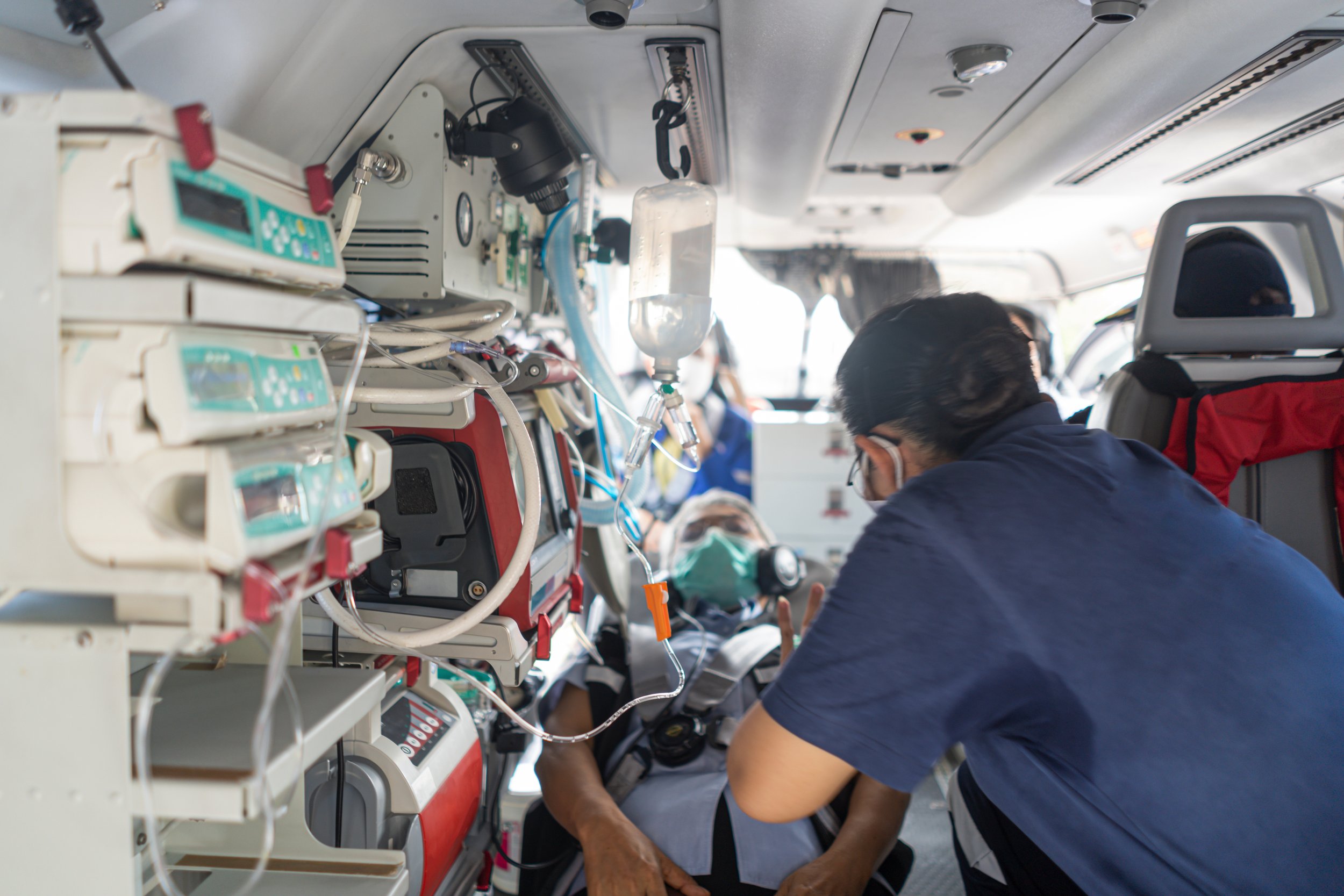
DMAT POP Disaster Medical Assistance Team: federal medical teams in the National Disaster Medical System that deploy to supplement local care. ASPR / NDMS
DMORT POP Disaster Mortuary Operational Response Team: federal teams that support victim recovery, identification, and family assistance after mass fatality incidents. ASPR / NDMS
Emergency Operations Center (EOC) SYS The location where agencies coordinate information, resources, and policy during an incident. EOC staff carry long hours and decision pressure, often far from the scene and far from support. NIMS
ESF #8 SYS Emergency Support Function #8, Public Health and Medical Services, under the National Response Framework. Behavioral health is one of its core functions, coordinated federally by HHS. National Response Framework
Incident Command System (ICS) SYS The standard command structure for managing incidents of any size. The NCDRW Integration Toolkit places wellness checkpoints inside ICS rather than beside it. NIMS
Incident Management Team (IMT) POP A trained, rostered team that manages complex or extended incidents using ICS. NIMS
Mass fatality incident SYS An incident with more deaths than local resources can handle. Recovery and identification work carries some of the highest exposure in disaster response. Common usage
National Incident Management System (NIMS) SYS The national framework that sets shared terms and structures, including ICS, for incident management across agencies. FEMA
Psychological safety SYS A team climate where people can admit mistakes, ask for help, or say they’re struggling without fear of punishment or ridicule. Leaders set it, and peer programs fail without it. Edmondson, 1999
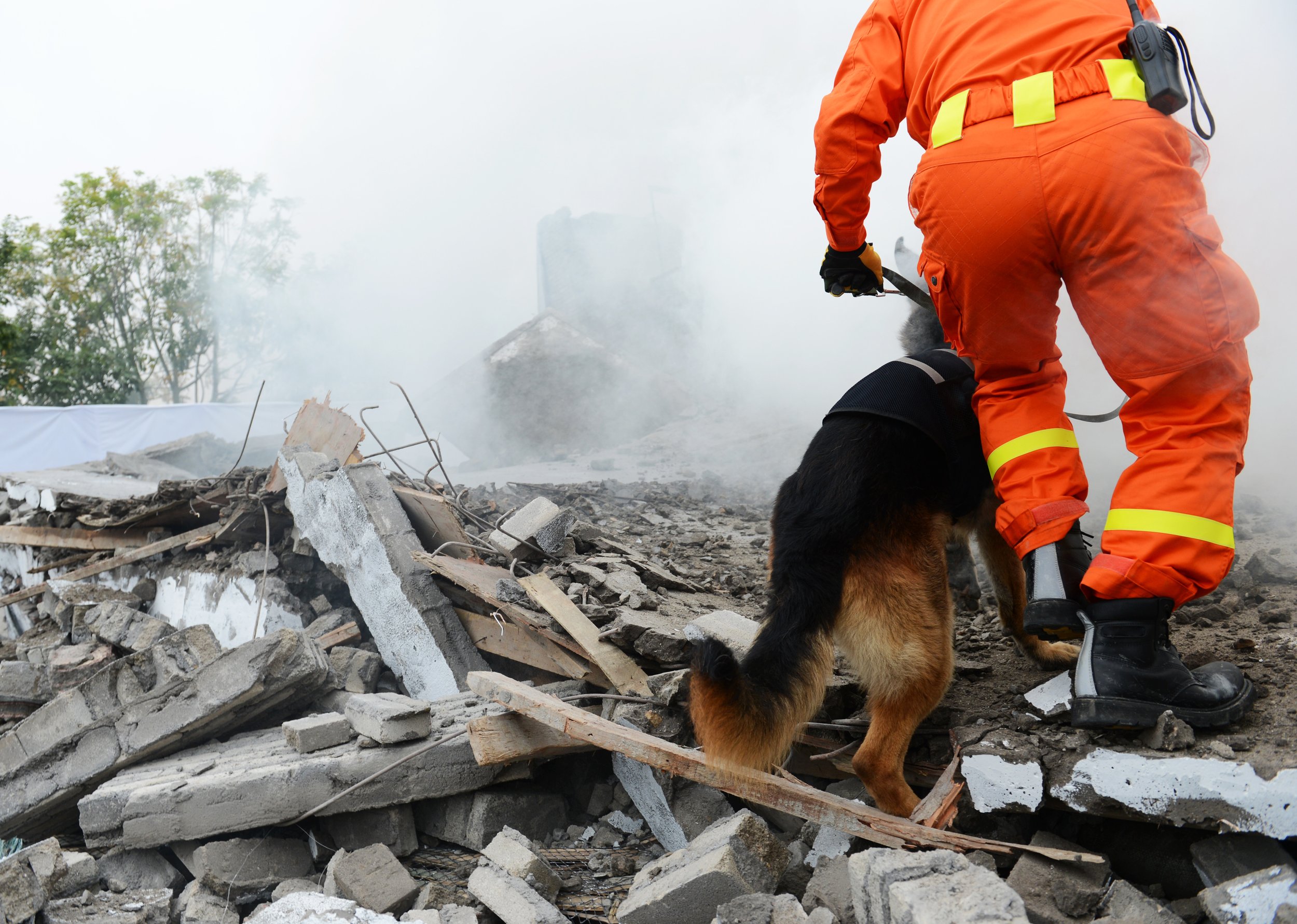
Urban Search and Rescue (USAR) POP Teams trained to locate and extract people from collapsed structures. FEMA’s national system includes 28 task forces. FEMA National US&R Response System

Lifecycle, Family, and Recovery

These terms follow a responder from before deployment through the end of a career, along with the people at home. All carry the LIFE code.

Table 5 — Lifecycle, Family, and Recovery
Term Definition Basis
Ambiguous loss A loss without clear answers or an ending, such as a missing person, or a family member who comes home from deployment physically present but emotionally gone. Boss, 1999
Career-Spanning Wellness Exposure Tracking A secure, portable record of exposures, screenings, and care that belongs to the responder and follows them across agencies and deployments. In development at NCDRW. NCDRW (Phase 4)
Deployment cycle The four phases this site uses to organize resources: before deployment (readiness and screening), during deployment, after the incident, and reintegration. NCDRW Resource Library structure
Disaster phases A model of how communities react over time: pre-disaster, impact, heroic, honeymoon, disillusionment, and reconstruction. Responders move through it on a different clock, often hitting disillusionment after they’ve gone home. DeWolfe, 2000 (SAMHSA)
Line of duty death (LODD) The death of a responder resulting from their duties. Definitions differ between federal benefit programs, states, and agencies, which matters for families seeking benefits. PSOB program; state statutes
Posttraumatic growth Positive change some people report after struggling with trauma, such as deeper relationships or a clearer sense of priorities. It doesn’t mean the trauma was good, and it often exists alongside ongoing pain. Tedeschi & Calhoun, 1996
Pre-deployment screening A brief, confidential check before deployment that looks at current stress, sleep, recent losses, and readiness at home. It exists to plan support, not to disqualify people. NCDRW Lifecycle Program
Reintegration The return to home, family, and regular duty after a deployment. NCDRW follows up at 30, 90, 180, and 365 days because reactions often surface late. NCDRW Lifecycle Program
Resilience The capacity to adapt and recover under strain. NCDRW treats it as something staffing, rest, leadership, and support systems build, rather than a trait individual responders either have or lack. APA; NCDRW position
Retirement and transition The move out of active service, which often brings loss of identity, team, and routine, along with exposures that surface once the pace slows. NCDRW Lifecycle Program

Language We Use

NCDRW content uses the terminology shown on the left. We encourage agencies adopting the Model Wellness Policy to do the same. The language in a policy can shape whether responders feel safe seeking support.

Table 6 — Language We Use
Use Instead of Why
Died by suicide Committed suicide “Committed” carries the language of crime and sin, and it lands hard on families.
Responder living with PTSD PTSD sufferer, broken, damaged Describes a condition a person has, not who they are.
Stress injury (in outreach); PTSD (when the diagnosis has been made) Mental illness, for on-the-job reactions Responders understand getting hurt on the job. Injury language makes treatment sound like rehab, which it is.
The specific practice: PFA, CISD, After-Action Psychological Review Debriefing, as a catch-all “Debriefing” means an operational review to some people and a mandated emotional session to others.
Potentially traumatic event Traumatic event, before the outcome is known Whether an event becomes traumatic depends on the person and the support that follows.
Survivor Victim, outside legal or crime contexts Most people affected by disasters prefer it, and it reflects what they’re doing.
Reaching out, using support Couldn’t handle it, weak Asking for help is a skill responders already use on every multi-alarm call.
Responder, or the specific role Hero, in support and clinical content The hero frame makes it harder to admit being hurt.
Person with a substance use disorder Addict, alcoholic, drunk Person-first language is linked to less stigma among clinicians and peers.

Sources and Review

Every definition traces to a published source or is marked as an NCDRW working definition. The Advisory Council reviews this glossary once a year and whenever a source it relies on is revised. To suggest a term or a correction, use the Contact page. Citation practice follows the Editorial Standard (9.3).

American Psychiatric Association. (2022). Diagnostic and statistical manual of mental disorders (5th ed., text rev.).
https://www.psychiatry.org/Patients-Families/What-is-the-DSM

American Psychological Association. (2017). Clinical practice guideline for the treatment of posttraumatic stress disorder (PTSD) in adults.
https://www.apa.org/ptsd-guideline

Berkowitz, S., Bryant, R., Brymer, M., Hamblen, J., Jacobs, A., Layne, C., Macy, R., Osofsky, H., Pynoos, R., Ruzek, J., Steinberg, A., Vernberg, E., & Watson, P. (2010). Skills for psychological recovery: Field operations guide. National Child Traumatic Stress Network and National Center for PTSD.
https://nctsn.org/resources/skills-for-psychological-recovery

Boss, P. (1999). Ambiguous loss: Learning to live with unresolved grief. Harvard University Press.

Brymer, M., Jacobs, A., Layne, C., Pynoos, R., Ruzek, J., Steinberg, A., Vernberg, E., & Watson, P. (2006). Psychological first aid: Field operations guide (2nd ed.). National Child Traumatic Stress Network and National Center for PTSD.
https://www.samhsa.gov/resource/dbhis/psychological-first-aid-field-operations-guide-2nd-edition-english

DeWolfe, D. J. (2000). Training manual for mental health and human service workers in major disasters (2nd ed.; D. Nordboe, Ed.). Federal Emergency Management Agency and Center for Mental Health Services, Substance Abuse and Mental Health Services Administration.
https://files.eric.ed.gov/fulltext/ED459383.pdf

Edmondson, A. (1999). Psychological safety and learning behavior in work teams. Administrative Science Quarterly, 44(2), 350–383.
https://doi.org/10.2307/2666999

Federal Emergency Management Agency. (n.d.). National Incident Management System. Retrieved October 1, 2026, from
https://www.fema.gov/emergency-managers/nims

Federal Emergency Management Agency. (n.d.). National Response Framework. Retrieved October 1, 2026, from
https://www.fema.gov/emergency-managers/national-preparedness/frameworks/response

Federal Emergency Management Agency. (2016). Emergency Support Function #8: Public health and medical services annex.
https://www.fema.gov/sites/default/files/2020-07/fema_ESF_8_Public-Health-Medical.pdf

Federal Emergency Management Agency. (n.d.). National Urban Search and Rescue Response System. Retrieved October 1, 2026, from
https://www.fema.gov/emergency-managers/national-preparedness/frameworks/urban-search-rescue

Figley, C. R. (Ed.). (1995). Compassion fatigue: Coping with secondary traumatic stress disorder in those who treat the traumatized. Brunner/Mazel.

Hobfoll, S. E., Watson, P., Bell, C. C., Bryant, R. A., Brymer, M. J., Friedman, M. J., Friedman, M., Gersons, B. P. R., de Jong, J. T. V. M., Layne, C. M., Maguen, S., Neria, Y., Norwood, A. E., Pynoos, R. S., Reissman, D., Ruzek, J. I., Shalev, A. Y., Solomon, Z., Steinberg, A. M., & Ursano, R. J. (2007). Five essential elements of immediate and mid-term mass trauma intervention: Empirical evidence. Psychiatry, 70(4), 283–315.
https://pubmed.ncbi.nlm.nih.gov/18181708/

Jameton, A. (1984). Nursing practice: The ethical issues. Prentice-Hall.

Litz, B. T., Stein, N., Delaney, E., Lebowitz, L., Nash, W. P., Silva, C., & Maguen, S. (2009). Moral injury and moral repair in war veterans: A preliminary model and intervention strategy. Clinical Psychology Review, 29(8), 695–706.
https://doi.org/10.1016/j.cpr.2009.07.003

McCann, I. L., & Pearlman, L. A. (1990). Vicarious traumatization: A framework for understanding the psychological effects of working with victims. Journal of Traumatic Stress, 3(1), 131–149.
https://doi.org/10.1007/BF00975140

Mitchell, J. T. (1983). When disaster strikes… the critical incident stress debriefing process. Journal of Emergency Medical Services, 8(1), 36–39.
https://pubmed.ncbi.nlm.nih.gov/10258348/

Rose, S., Bisson, J., Churchill, R., & Wessely, S. (2002). Psychological debriefing for preventing post traumatic stress disorder (PTSD). Cochrane Database of Systematic Reviews, 2002(2), Article CD000560.
https://doi.org/10.1002/14651858.CD000560

Substance Abuse and Mental Health Services Administration. (2014). SAMHSA’s concept of trauma and guidance for a trauma-informed approach (HHS Publication No. SMA 14-4884).
https://library.samhsa.gov/product/samhsas-concept-trauma-and-guidance-trauma-informed-approach/sma14-4884

Shay, J. (1994). Achilles in Vietnam: Combat trauma and the undoing of character. Atheneum.

Tedeschi, R. G., & Calhoun, L. G. (1996). The Posttraumatic Growth Inventory: Measuring the positive legacy of trauma. Journal of Traumatic Stress, 9(3), 455–471.
https://doi.org/10.1007/BF02103658

U.S. Department of Veterans Affairs & U.S. Department of Defense. (2023). VA/DoD clinical practice guideline for the management of posttraumatic stress disorder and acute stress disorder.
https://www.healthquality.va.gov/guidelines/MH/ptsd/

Watson, P., & Westphal, R. J. (2020). Stress first aid for health care workers. National Center for PTSD.
https://www.ptsd.va.gov/disaster_events/for_providers/stress_first_aid.asp

World Health Organization. (2013). Guidelines for the management of conditions specifically related to stress.
https://www.who.int/publications/i/item/9789241505406

World Health Organization. (n.d.). International classification of diseases, 11th revision (ICD-11). Retrieved October 1, 2026, from
https://icd.who.int/browse11/l-m/en